Publications

You can also find my articles on my Google Scholar profile.

Journal Articles


The Impact of Light Conditions on Neural Affect Classification: A Deep Learning Approach

Published in Machine Learning and Knowledge Extraction, 2024

Understanding and detecting human emotions is crucial for enhancing mental health, cognitive performance and human–computer interactions. This field in affective computing is relatively unexplored, and gaining knowledge about which external factors impact emotions could enhance communication between users and machines. Furthermore, it could also help us to manage affective disorders or understand affective physiological responses to human spatial and digital environments. The main objective of the current study was to investigate the influence of external stimulation, specifically the influence of different light conditions, on brain activity while observing affect-eliciting pictures and their classification. In this context, a multichannel electroencephalography (EEG) was recorded in 30 participants as they observed images from the Nencki Affective Picture System (NAPS) database in an art-gallery-style Virtual Reality (VR) environment. The elicited affect states were classified into three affect classes within the two-dimensional valence–arousal plane. Valence (positive/negative) and arousal (high/low) values were reported by participants on continuous scales. The experiment was conducted in two experimental conditions: a warm light condition and a cold light condition. Thus, three classification tasks arose with regard to the recorded brain data: classification of an affect state within a warm-light condition, classification of an affect state within a cold light condition, and warm light vs. cold light classification during observation of affect-eliciting images. For all classification tasks, Linear Discriminant Analysis, a Spatial Filter Model, a Convolutional Neural Network, the EEGNet, and the SincNet were compared. The EEGNet architecture performed best in all tasks. It could significantly classify three affect states with 43.12% accuracy under the influence of warm light. Under the influence of cold light, no model could achieve significant results. The classification between visual stimulus with warm light vs. cold light could be classified significantly with 76.65% accuracy from the EEGNet, well above any other machine learning or deep learning model. No significant differences could be detected between affect recognition in different light conditions, but the results point towards the advantage of gradient-based learning methods for data-driven experimental designs for the problem of affect decoding from EEG, providing modern tools for affective computing in digital spaces. Moreover, the ability to discern externally driven affective states through deep learning not only advances our understanding of the human mind but also opens avenues for developing innovative therapeutic interventions and improving human–computer interaction.

Recommended citation: Zentner, S., Barradas Chacón, A., & Wriessnegger, S. C. (2024). The Impact of Light Conditions on Neural Affect Classification: A Deep Learning Approach. Machine Learning and Knowledge Extraction, 6(1), 199–214.
Download Paper | Download Slides

Effects of handedness on brain oscillatory activity during imagery and execution of upper limb movements

Published in Frontiers in Psychology, 2023

Brain activation during left- and right-hand motor imagery is a popular feature used for brain–computer interfaces. However, most studies so far have only considered right-handed participants in their experiments. This study aimed to investigate how handedness influences brain activation during the processes of imagining and executing simple hand movements. EEG signals were recorded using 32 channels while participants repeatedly squeezed or imagined squeezing a ball using their left, right, or both hands. The data of 14 left-handed and 14 right-handed persons were analyzed with a focus on event-related desynchronization/synchronization patterns (ERD/S). Both handedness groups showed activation over sensorimotor areas; however, the right-handed group tended to display more bilateral patterns than the left-handed group, which is in contrast to earlier research results. Furthermore, a stronger activation during motor imagery than during motor execution could be found in both groups.

Recommended citation: Lajtos, M., Barradas-Chacón, L. A., & Wriessnegger, S. C. (2023). Effects of handedness on brain oscillatory activity during imagery and execution of upper limb movements. Frontiers in Psychology, 14, 1161613.
Download Paper | Download Slides

Stylized faces enhance ERP features used for the detection of emotional responses

Published in Frontiers in Human Neuroscience, 2023

It is found that artificially enhanced human faces with exaggerated, cartoonish visual features significantly improve some commonly used neural correlates of emotion as measured by event-related potentials (ERPs).

Recommended citation: Barradas-Chacón, L. A., Brunner, C., & Wriessnegger, S. C. (2023). Stylized faces enhance ERP features used for the detection of emotional responses. Frontiers in Human Neuroscience, 17, 1160800.
Download Paper | Download Slides

The influence of visual representation factors on bio signals and its relation to Presence in Virtual Reality Environments

Published in MetroXRAINE 2022, 2022

Strong inter-individual differences in heart rate (HR) and heart rate variability (HRV) indicate an influence of visual representation factors during presence in virtual reality (VR) environments.

Recommended citation: Wriessnegger, S. C., Autengruber, L. M., Chacón, L. A. B., Pirker, J., & Safikhani, S. (2022, October). The influence of visual representation factors on bio signals and its relation to Presence in Virtual Reality Environments. In 2022 IEEE International Conference on Metrology for Extended Reality, Artificial Intelligence and Neural Engineering (MetroXRAINE) (pp. 199-204). IEEE.
Download Paper | Download Slides

Roadmap on signal processing for next generation measurement systems

Published in Measurement Science and Technology, 2021

Signal processing is a fundamental component of almost any sensor-enabled system, with a wide range of applications across different scientific disciplines. Time series data, images, and video sequences comprise representative forms of signals that can be enhanced and analysed for information extraction and quantification. The recent advances in artificial intelligence and machine learning are shifting the research attention towards intelligent, data-driven, signal processing. This roadmap presents a critical overview of the state-of-the-art methods and applications aiming to highlight future challenges and research opportunities towards next generation measurement systems. It covers a broad spectrum of topics ranging from basic to industrial research, organized in concise thematic sections that reflect the trends and the impacts of current and future developments per research field. Furthermore, it offers guidance to researchers and funding agencies in identifying new prospects.

Recommended citation: Iakovidis, D. K., Ooi, M., Kuang, Y. C., Demidenko, S., Shestakov, A., Sinitsin, V., Henry, M., Sciacchitano, A., Discetti, S., Donati, S., Norgia, M., Menychtas, A., Maglogiannis, I., Wriessnegger, S. C., Barradas-Chacón, L. A., et al. (2022). Roadmap on signal processing for next generation measurement systems. Measurement Science and Technology, 33(1), 012002.
Download Paper | Download Slides
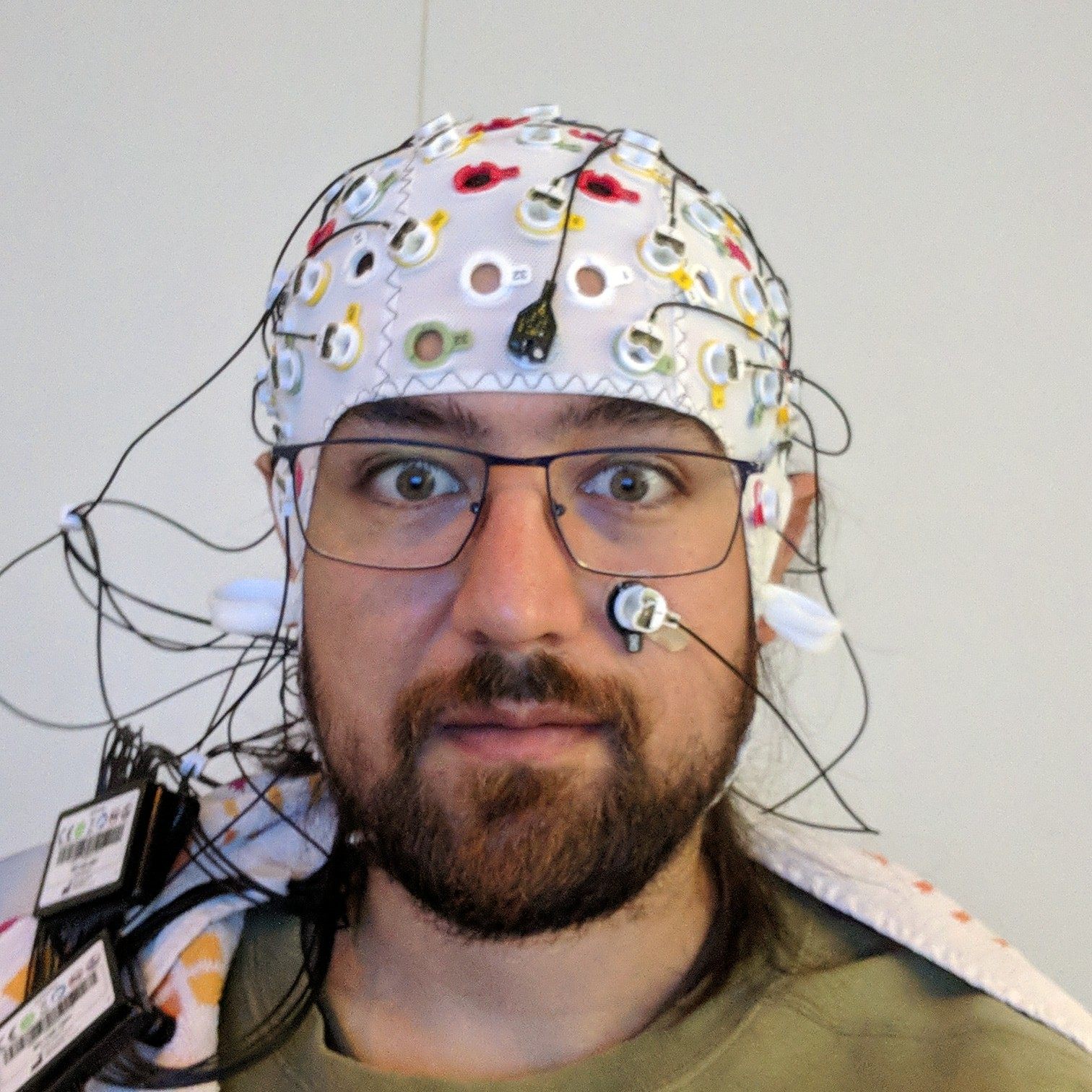
Emotion analysis using heart rate data

Published in DEXA 2019, 2019

Classifying emotional states from heart rate data, presented at the DEXA 2019 international workshops.

Recommended citation: Barradas-Chacón, L. A., Fedoskin, A., Shcheglakova, E., Neamsup, S., & Rashed, A. (2019). Emotion analysis using heart rate data. In Database and Expert Systems Applications: DEXA 2019 International Workshops BIOKDD, IWCFS, MLKgraphs and TIR, Linz, Austria, August 26–29, 2019, Proceedings 30 (pp. 147-154). Springer International Publishing.
Download Paper | Download Slides

Conference Papers


The HeartRateLab.jl: a toolkit for heart beats time series

Published in JuliaCon 2026, 2026

Heart rate time signals are one of the most readily available and cost effective biosignals for the study of human behavior. Their availability and ease of use make them ideal for open science. Many programming languages provide libraries that enable the manipulation of the time series generated by measuring the time in milliseconds between each heart beat: the Inter-Beat-Interval (IBI). However advanced functionality is only provided by private software, and many of opensource libraries seem to be designed as simple feature extraction libraries, and many have fallen into disuse. In this work we present the HeartRateLab: a new, powerful, and complete computational framework, written in julia, for the processing, analysis, modeling, and evaluation of human heart IBIs. The Julia language enables the ideal environment for explicit scientific management of operational, data-driven definitions of features used to define heart rate variability, and their physiological statistical relevance in several different domains. With the use of Julia’s rich and interconnected scientific modeling environment, and the open scientific community, the HeartRateLab enables the most complete set of processing functions for IBI timeseries. Complete sets of features can be extracted from entire recordings, or using resampling or rolling window approaches with the overpowered capabilities of the language. Using Julia’s DifferentialEquations.jl, Turing.jl, and other scientific libraries, the HeartRateLab provides the tools for modeling complex systems, including data-driven models for parameter recovery. The HeartRateLab showcases the stable complexity management environment that the Julia language and its community provide for scientific programming, while demonstrating intricate, applicable, but also very simple and embodied principles about the rhythms to which our hearts beat.

Recommended citation: Barradas-Chacón, L. A. (2026). The HeartRateLab.jl: a toolkit for heart beats time series. Long talk presented at JuliaCon 2026, Mainz, Germany, 12 August 2026. Software: https://github.com/abcsds/HeartRateLab.jl
Download Paper | Download Slides

Workshops


High Performance Computing for Dynamical Systems and Bayesian Estimation with On-Demand Computing Resources

Published in MathPsych/ICCM 2025 Conference, 2025

Workshop on High Performance Computing for Dynamical Systems and Bayesian Estimation at the MathPsych/ICCM 2025 Conference

Recommended citation: Barradas-Chacón, L. A. (2025). High Performance Computing for Dynamical Systems and Bayesian Estimation with On-Demand Computing Resources. Workshop for the International Conference on Mathematical Psychology and Cognitive Modeling (MathPsych/ICCM), 2025, Ohio, USA.
Download Paper | Download Slides

Posters


Mental Demand without brain signals: a practical approach to modeling the N-Back task

Published in MathPsych/ICCM 2025 Conference, 2025

Accessible, low-cost, and open-source approaches to modeling cognitive mental demand using subjective reports, heart rate variability, eye-tracking, and psychochronometric behavior.

Recommended citation: Barradas-Chacón, L. A. (2025). Mental Demand without brain signals: a practical approach to modeling the N-Back task. Workshop for the International Conference on Mathematical Psychology and Cognitive Modeling (MathPsych/ICCM), 2025, Ohio, USA.
Download Paper | Download Slides